
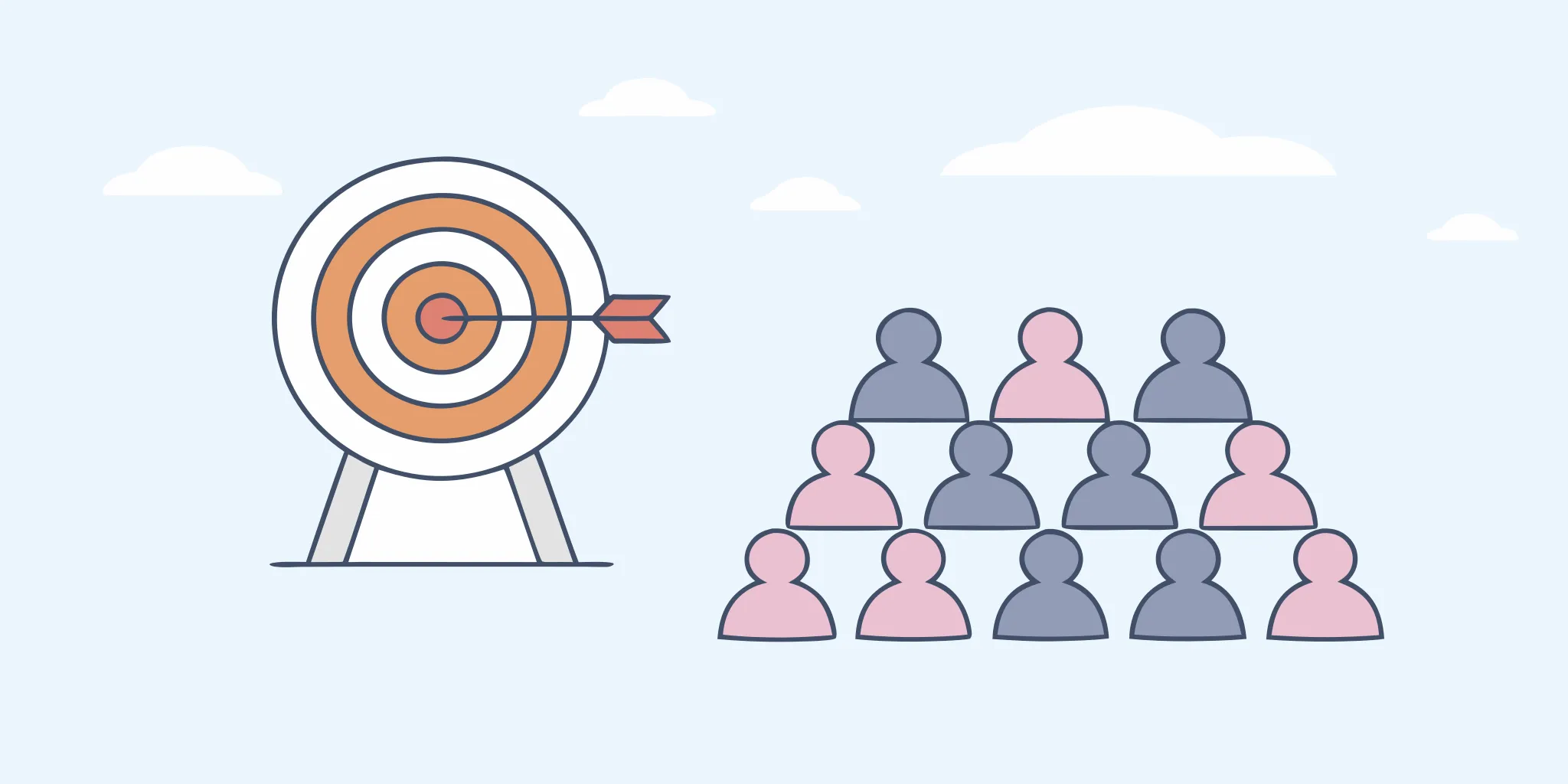
Trying to sell your product or service to everyone is one of the fastest ways to waste your budget and dilute your message. When you speak to everybody, you often end up connecting with nobody. The solution isn’t to narrow your ambition, but to sharpen your focus. This is where a clear target market definition becomes your most powerful strategic tool. It’s not about excluding potential customers; it’s about directing your energy toward the specific group of people who are most likely to need and love what you offer. This guide will walk you through how to identify this group, ensuring your marketing, product development, and overall business plan are built on a solid foundation.
Key Takeaways
Define to Refine Your Strategy: A clear target market is not about limiting your reach; it is about focusing your resources. Knowing exactly who you are talking to allows you to refine your messaging, product development, and budget for maximum impact.
Go Beyond Guesswork with Research: Don't rely on assumptions to build your customer profile. Use a mix of quantitative data from analytics and qualitative insights from customer interviews to create an accurate, evidence-based picture of your ideal audience.
Revisit Your Audience Periodically: Markets and customer needs are always changing. Treat your target market definition as a dynamic tool, not a one-time task, by reviewing and updating it regularly to keep your business plan relevant and effective.
What Is a Target Market?
Before you can build a successful business plan, you need to know who you’re building it for. That’s where your target market comes in. Think of it as the specific group of customers your business wants to reach. According to Qualtrics, these are the people who "share common traits and are most likely to be interested in a company's products or services." Trying to sell to everyone is like shouting into a void; defining a target market allows you to speak directly to the people who are already listening, making your efforts far more effective.
Identifying this group is the foundational step for creating an effective strategy. It guides every decision you make, from the features you develop to the marketing channels you use and the messages you create. When you have a crystal-clear picture of your ideal customer, you can stop wasting resources on efforts that don’t connect. Instead, you can focus your time, budget, and energy on initiatives that resonate deeply with the right people. This focused strategic approach is not just about better marketing; it’s about building a more efficient, sustainable, and successful business from the ground up. It ensures your entire organization, from sales to product development, is aligned and working toward the same goal.
Target Market vs. Target Audience
While people often use "target market" and "target audience" interchangeably, they have distinct meanings that are important for your marketing efforts. The main difference comes down to scope. As research firm NIQ explains, "A target market is a big group of potential customers with similar traits. A target audience is a smaller, more specific group within that target market."
Think of it this way: your target market is the broad group you want to sell to, while your target audience is the specific group you’re talking to in a particular campaign. For example, a software company’s target market might be "mid-sized B2B tech companies." However, for an ad campaign promoting a new HR feature, their target audience might be "HR managers at those specific companies."
Target Market vs. Market Segmentation
So if a target market is your "who," how do you find them? The answer is market segmentation. These two concepts are directly related, but they aren't the same thing. Market segmentation is the process of dividing a broad market into smaller, more defined groups. It’s the action you take to identify your target market. By breaking down a large population into manageable pieces, you can focus on the segments that are most likely to become loyal customers.
The process to identify and define your target market involves creating groups that share similar characteristics. These segments are often based on four main types of data: demographic (age, income), psychographic (lifestyle, values), geographic (location), and behavioral (purchasing habits, brand loyalty). By analyzing these segments, you can select the one that best aligns with your products or services, officially making it your target market.
Why Define Your Target Market?
Defining your target market is one of the most important foundational steps you can take for your business. It’s not about excluding potential customers; it’s about focusing your energy and resources where they will have the greatest impact. Think of it as creating a clear roadmap for your strategy. When you know exactly who you’re trying to reach, every decision, from marketing campaigns to product development, becomes simpler and more effective. This clarity helps you move from broad, hopeful gestures to precise, strategic actions that drive real results.
Without a defined target market, you risk trying to be everything to everyone, which often leads to being nothing special to anyone. Your message gets diluted, your budget gets stretched thin, and your team loses focus. By identifying the specific group of people most likely to need and love what you offer, you can tailor your entire business to meet their needs. This focused approach is the cornerstone of efficient planning and sustainable growth, allowing you to build a stronger brand and a more loyal customer base. At Amvent, we see this as a critical part of our structured approach to helping businesses plan better and achieve long-term success.
Sharpen Your Marketing Strategy
When you know your target market, you can stop shouting into the void and start having meaningful conversations. A clear definition of your ideal customer allows you to craft marketing messages that resonate on a personal level. You understand their pain points, speak their language, and know which channels they use to find information. This means your content, ads, and outreach efforts are seen by the people who are most likely to be interested. Instead of guessing what might work, you can build a marketing strategy based on a deep understanding of who your customers are and what they truly care about, making every marketing dollar work harder for you.
Allocate Resources More Effectively
Trying to appeal to everyone is not just ineffective; it’s expensive. Defining your target market is a crucial step in smart resource allocation. It allows you to concentrate your time, budget, and effort on the initiatives that will deliver the highest return. Instead of spreading your marketing spend across dozens of platforms, you can invest in the few where your ideal customers are most active. This focus applies beyond marketing, too. It informs your sales strategy, your customer service model, and even your hiring decisions. By directing your resources with precision, you minimize waste and maximize your operational efficiency, a core principle of sound business planning.
Strengthen Product-Market Fit
The best products and services are born from a deep understanding of a customer’s needs. When you have a clearly defined target market, you have a direct line to the people you’re trying to serve. You can use their feedback to refine your offerings and develop new solutions that solve their specific problems. This continuous loop of feedback and improvement helps you achieve a strong product-market fit, where your offering is something your customers can't live without. This deep connection not only drives initial sales but also fosters long-term loyalty and turns customers into advocates for your brand. Gaining a deep understanding of your audience is the key to creating products that stick.
Improve Business Planning and Forecasting
A well-defined target market brings incredible clarity to your entire business planning process. When you know the size and characteristics of your audience, you can create more accurate sales forecasts, set realistic growth targets, and make smarter decisions about inventory and staffing. This clarity reduces risk and uncertainty, allowing you to build a strategic plan based on data, not assumptions. You can identify profitable niches and anticipate market shifts with greater confidence. For any organization looking to plan better, defining the target market is an essential exercise that informs every aspect of your long-term strategy and helps you build a more resilient and successful business.
The 4 Main Types of Market Segmentation
Once you understand the value of defining your target market, the next step is to break that market down into smaller, more defined groups. This process is called market segmentation, and it’s a foundational part of any successful business plan. Instead of trying to appeal to everyone, segmentation allows you to focus your resources on specific groups of people who are most likely to become loyal customers. Think of it as creating a detailed map of your market landscape.
This strategic division helps you tailor your products, messaging, and overall business strategy to meet the precise needs of different customer groups. By understanding these segments, you can create more impactful marketing campaigns and develop products that truly resonate. This focused strategy is a core part of our structured approach at Amvent, as it ensures every decision is backed by a clear understanding of the customer. There are four primary ways to segment your market, each offering a different lens through which to view your potential customers.
Demographic
Demographic segmentation is likely the first type that comes to mind. It involves grouping your market based on statistical data like age, gender, income, education level, occupation, and family size. These are the "who" of your customer base. This method is popular because the data is often straightforward to collect and analyze. For example, a company selling high-end financial planning software would likely target individuals in a specific income and age bracket who have a certain level of education. Understanding these characteristics helps you identify your target market with greater precision, ensuring your marketing budget is spent reaching the right people.
Psychographic
If demographics tell you who your customers are, psychographics tell you why they buy. This type of segmentation groups people based on their psychological traits, such as lifestyle, values, interests, and personality. It goes beyond the numbers to explore what motivates your audience. For instance, a brand selling outdoor adventure gear would target consumers who value experiences, sustainability, and an active lifestyle. By aligning your brand's story with these core values, you can build a much deeper and more meaningful connection with your customers, turning them from one-time buyers into long-term advocates.
Geographic
Geographic segmentation involves dividing your market based on location. This can be as broad as a country or continent, or as specific as a city, neighborhood, or even a particular climate zone. This approach is incredibly practical, as a customer's needs can change dramatically based on where they live. A clothing retailer, for example, would promote lightweight fabrics in warmer regions and insulated coats in colder ones. For businesses with a physical presence, this segmentation is essential for local marketing efforts. For global companies, it helps in adapting products and messaging to suit different cultural contexts and regional preferences.
Behavioral
Behavioral segmentation categorizes customers based on their actions and interactions with your brand. This includes their purchasing habits, brand loyalty, usage rate, and the specific benefits they seek from a product. Are they first-time buyers or repeat customers? Do they use your product daily or only on special occasions? For example, a software company might offer a streamlined onboarding process for new users while providing advanced feature tutorials to power users. This type of segmentation is powerful because it’s based on actual customer data, allowing you to create highly relevant and timely marketing strategies that address specific consumer behaviors.
What Are the Key Characteristics of a Target Market?
Once you understand the different ways to segment a market, you can start building a detailed profile of your ideal customer. A target market isn’t just a vague idea; it’s a specific group of people defined by a combination of shared traits. By focusing on a few key characteristics, you can move from a broad audience to a well-defined group that is most likely to be interested in what you offer. These characteristics help you understand not just who your customers are, but where they are, what they care about, and how they make decisions. Think of it as creating a blueprint for your ideal customer. This blueprint becomes an essential tool in your strategic planning process, guiding everything from product development to your marketing messages. When you know exactly who you’re talking to, you can speak their language, address their specific pain points, and build a brand that resonates deeply. Let's look at the four core areas that will help you paint this clear picture.
Demographics
Demographics are the statistical building blocks of your target market. Think of them as the "who" in your customer profile. This data includes quantifiable traits like age, gender, income, occupation, education level, and family size. While it might seem basic, demographic information is fundamental to your business planning. For example, knowing your target customer’s average income helps you set a price point that feels right for them. Similarly, understanding their occupation can give you clues about their daily challenges and needs. You can find a lot of this statistical data through public sources and market research, giving you a solid foundation for every strategic decision you make.
Psychographics
If demographics tell you who your customers are, psychographics tell you why they do what they do. This characteristic goes beyond the numbers to explore your audience’s internal world, including their lifestyle, interests, values, and attitudes. Are they early adopters of new technology? Do they prioritize sustainability and ethical sourcing? What are their personal and professional goals? Answering these questions helps you craft marketing messages that truly connect. Understanding the psychographic profile of your audience allows you to align your brand’s story with their core beliefs, building a much stronger and more authentic relationship than you could with demographics alone.
Location
Location, or geographic segmentation, is all about where your target customers are physically located. This can be as broad as a country or as specific as a neighborhood. For some businesses, this is obvious; a local coffee shop will naturally target people who live or work nearby. But even for online businesses, location matters. It can influence everything from shipping costs and delivery times to the cultural references you use in your marketing. Knowing where your customers are also helps you identify regional trends, run location-specific ad campaigns, and understand the competitive landscape in different areas, making it a critical piece of your strategic plan.
Buying Behaviors
Finally, understanding your target market’s buying behaviors reveals how they interact with products and brands like yours. This characteristic looks at their purchasing habits, such as how often they buy, how much they spend, and what factors influence their decisions. Are they loyal to certain brands, or are they always looking for the best deal? Do they make impulse purchases or conduct extensive research first? Analyzing these behavioral patterns helps you tailor your sales cycle and marketing efforts. For instance, if your audience values customer reviews, you can highlight testimonials. If they respond to urgency, flash sales might be effective. This insight is key to meeting customers where they are in their buying journey.
How to Identify Your Target Market
Pinpointing your target market is less about intuition and more about investigation. It’s a foundational exercise that informs every part of your business strategy, from product development to your marketing messages. When you know exactly who you’re trying to reach, you can stop casting a wide, expensive net and start having meaningful conversations with the people who are most likely to become loyal customers. The process involves a mix of data analysis, direct conversation, and strategic thinking. By following a structured approach, you can move from vague assumptions to a crystal-clear picture of your ideal customer. This clarity is the bedrock of effective business planning, ensuring your resources are always pointed in the right direction.
Analyze Your Current Customers
Your best source of information is often right in front of you: your existing customers. Start by looking at who is already buying from you, especially your most profitable and loyal clients. What do they have in common? Look for patterns in their demographics, industries, company size, and job titles. What specific problems did your product or service solve for them? Understanding your current customer base helps you identify potential new customers who share similar traits and challenges. This data provides a realistic starting point, grounding your market definition in proven success rather than theory. It’s the most direct way to see who already finds value in what you offer.
Talk to Your Audience Directly
Data can tell you the "what," but conversations will tell you the "why." Reaching out to your audience for direct feedback is an invaluable step. You can use surveys, focus groups, or one-on-one conversations to gather qualitative insights. Conducting interviews can be especially powerful; just be sure to prepare a consistent set of open-ended questions. Ask about their biggest challenges, their goals for the coming year, and what they look for in a solution provider. These conversations not only help you refine your understanding of their needs but also build stronger relationships. You’ll uncover nuances in their thinking that raw data alone could never reveal.
Research Your Competitors
Understanding your competition is key to finding your unique place in the market. Analyze who your competitors are targeting with their marketing and sales efforts. What kind of language do they use? Which customer segments do they seem to focus on most? This analysis can reveal a lot about the established landscape. More importantly, it can help you spot opportunities they might be overlooking. Look for groups of customers whose needs are not being fully met by current offerings. This gap could become your strategic advantage, allowing you to position your business as the ideal solution for an underserved segment of the market.
Create Customer Personas
After gathering all your research, the final step is to bring it all to life by creating customer personas. A persona is a detailed profile that represents your ideal customer. Go beyond basic demographics and give this fictional character a name, a job title, goals, motivations, and specific pain points. For example, you might create "Finance Director Fiona," who is struggling with manual data entry and needs a more efficient planning tool. These personas make your target market tangible for your entire team. They serve as a constant reference point, ensuring that your product development, marketing campaigns, and strategic planning efforts are always aligned with the real people you want to serve.
Tools for Target Market Research
Once you know what information you’re looking for, you need the right tools to find it. Thankfully, you don’t have to rely on guesswork. A variety of powerful resources can give you concrete data about your customers, competitors, and the market at large. Using these tools helps you move from assumptions to data-backed insights, which is the foundation of any successful business plan.
Think of this as the discovery phase of your strategic planning. The data you gather here will inform everything from your marketing campaigns to your product development roadmap. By investing time in research, you build a stronger, more resilient strategy that aligns with real-world customer needs. This data-driven approach is exactly what we at Amvent champion, as it ensures your business planning is grounded in reality, not hypotheticals. Let’s look at some of the best tools to get you started.
Analytics and Social Media Insights
Your own digital properties are a great starting point. Website analytics platforms like Google Analytics can show you the demographics, locations, and interests of your site visitors. You can also see which pages they visit most and how they found you. Similarly, your social media accounts have built-in analytics that offer a peek into your followers. These platforms provide valuable data analysis on who engages with your content. Look at the insights on your Instagram, Facebook, or LinkedIn pages to understand the age, gender, and location of your most active followers. This information is a direct line to understanding who is already interested in what you offer.
CRM Software
Your Customer Relationship Management (CRM) software is a goldmine of information about your existing customer base. By analyzing the data on your most loyal and profitable customers, you can build a clear picture of your ideal buyer. Look at their purchase history, communication records, and any demographic information you’ve collected. This process helps you conduct market research that identifies your most valuable customer segments. When you know who your best customers are, you can focus your efforts on finding more people just like them, making your marketing and sales efforts much more efficient.
Competitive Analysis Tools
Understanding your target market also means understanding who your competitors are targeting. By analyzing their strategies, you can identify opportunities they might be overlooking. Tools like Semrush and Ahrefs can show you which keywords your competitors are ranking for and where their website traffic comes from. This intelligence allows you to find underserved niches or customer groups. You might discover groups of customers that your competitors are ignoring, giving you a unique opening in the market. This isn't about copying them; it's about finding your own space to win.
Public Data and Industry Reports
High-quality market research doesn’t always have to come with a high price tag. There are many free, public resources available that provide extensive demographic and economic data. Government agencies are an excellent source for this. For example, you can find valuable demographic information from resources like the Bureau of Labor Statistics and the U.S. Census Bureau. These sites offer detailed data on population trends, income levels, and employment that can help you size up a potential market. You can also look for free industry reports from market research firms to understand broader trends affecting your customers.
Common Mistakes to Avoid When Defining Your Target Market
Identifying your target market is one of the most foundational steps in building a successful business strategy. When you know exactly who you’re talking to, every decision, from product development to marketing campaigns, becomes clearer and more effective. However, this process is filled with common pitfalls that can lead even the most well-intentioned teams astray. Getting it wrong can result in wasted resources, muddled messaging, and a plan that fails to connect with the people who matter most.
Think of your target market definition as the foundation of your business plan. If that foundation is cracked or unstable, everything you build on top of it will be at risk. The good news is that these mistakes are entirely avoidable. By understanding where others have gone wrong, you can approach the process with greater clarity and confidence. Let’s walk through some of the most frequent errors so you can steer clear of them and build a strategy that truly resonates with your ideal customer. This is a key part of our approach to building a solid plan for long-term success.
Defining Your Audience Too Broadly
One of the most common missteps is casting your net too wide. It’s tempting to think that your product or service is for "everyone," but this approach almost always leads to ineffective marketing. When you try to speak to everybody, you end up connecting with nobody. Your message becomes too generic to capture anyone's attention, and your marketing budget gets spread too thin across too many channels.
Instead, you need a clear picture of who your customers are, what they care about, and their buying behaviors. For example, instead of targeting "small businesses," you could focus on "tech startups with 10 to 50 employees in North America." This level of specificity allows you to craft a message that speaks directly to their unique challenges and goals, making your marketing efforts far more impactful.
Forgetting to Segment
Once you’ve narrowed down your broad market, the next mistake to avoid is treating everyone within that group as a monolith. Your target market is likely composed of several smaller subgroups, or segments, each with distinct characteristics and needs. Forgetting to segment means you miss opportunities for more personalized and relevant communication. It’s the difference between sending a generic email blast and a tailored message that addresses a specific pain point.
After you identify your market segments, take the time to define your ideal customer for each one. You can write a short profile for each persona, explaining who they are and what motivates them. This simple exercise helps you understand what different customers care about, allowing you to tailor your products, services, and messaging accordingly.
Relying on Assumptions Instead of Research
Basing your target market on gut feelings or what you think you know about your customers is a recipe for failure. Assumptions are often riddled with personal bias and outdated information, creating a major disconnect between your strategy and market realities. The most successful companies make decisions based on data, not guesswork. This is why it’s so important to conduct thorough market research.
Before you start collecting information, be clear about what you’re trying to achieve. Many businesses make the mistake of gathering data for its own sake, which results in a pile of information that doesn't address their real needs. Instead, focus your market research on answering specific questions about your potential customers. Use the tools at your disposal, like analytics and customer surveys, to validate your ideas with real-world evidence.
Failing to Revisit Your Target Market
Defining your target market isn’t a one-and-done task. Markets are dynamic; customer preferences shift, new competitors emerge, and technologies evolve. A common error is creating a target market profile and then letting it gather dust for years. A definition that was perfect two years ago might be completely irrelevant today. People change, and your business strategy needs to adapt along with them.
To stay relevant, you should refresh your market segmentation strategies and re-evaluate your audience periodically. Make it a habit to review your customer personas and market data at least once a year. Are your assumptions still holding true? Have new trends emerged? By regularly revisiting your target market, you ensure your business plan remains aligned with the people you want to reach, keeping your organization agile and responsive to change.
How a Clear Target Market Shapes Your Business Strategy
Defining your target market is more than just a marketing exercise; it’s a cornerstone of your entire business strategy. When you have a crystal-clear picture of who you’re serving, every decision, from product development to financial forecasting, becomes more focused and effective. This clarity acts as a guide, ensuring that all parts of your business are working together to meet the needs of the people who matter most: your customers. It transforms your strategy from a set of abstract goals into a practical plan for connecting with and serving a real group of people.
Guide Product Development and Positioning
Knowing your target market allows you to create products and services that your customers actually want and need. Instead of guessing what might sell, you can build solutions that directly address their specific pain points and desires. A target market is a specific group of potential customers who share common traits, and understanding these traits is your key to innovation. This insight also shapes how you position your offerings. You can craft messaging, highlight features, and set a price point that resonates deeply with this group, making it much easier for them to see the value in what you provide and choose you over the competition.
Inform Resource Allocation and Campaigns
Without a defined target market, you risk spreading your resources too thin. A clear focus helps you allocate your budget, time, and team’s energy where they will have the greatest impact. Market research reveals which customer segments are most profitable and how to reach them, so you can stop wasting money on campaigns that don’t convert. This is especially important when customer acquisition costs are rising. By concentrating your efforts on the most promising channels and creating highly relevant campaigns, you not only improve your return on investment but also build stronger connections with the people most likely to become loyal customers.
Align Your Planning Process with Your Ideal Customer
Your target market should be at the heart of your business planning process. Once you define your ideal customer for each segment, you can build more accurate and realistic strategic plans. This detailed customer profile informs everything from sales forecasts and inventory management to long-term growth initiatives. For example, knowing your customers' purchasing habits helps you anticipate demand and manage cash flow more effectively. By integrating this customer-centric data into your planning, you create a dynamic strategy that can adapt to your audience's evolving needs, driving sustainable success for your organization.
Related Articles
Sales Capacity Planning: How to Align Revenue Targets With Real Sales Performance
RevOps and Strategic Planning: How to Optimize Revenue Growth Through Better Forecasting
Choosing the right Planning System: A 5-Step Evaluation Framework
Cash Flow Planning: A CFO’s Guide to Forecasting, Runway, and Financial Strategy
Frequently Asked Questions
What’s the real difference between a target market and a target audience? Think of it this way: your target market is the entire group of people you want to sell to, while your target audience is the specific group you’re speaking to in a particular marketing campaign. For example, a company’s target market might be all B2B tech companies, but their target audience for a new HR software ad would be the HR managers within those companies. The market is your strategic focus; the audience is your tactical focus.
I’m a new business with no customers yet. How can I define my target market? When you don't have existing customer data, your best starting point is competitor and market research. Look at who your direct competitors are serving and, more importantly, who they might be ignoring. You can identify gaps in the market where customer needs aren't being fully met. From there, build a hypothetical customer persona based on the problem your product solves and then use surveys or interviews to validate if that group actually has the problem you think they do.
How specific is too specific when defining a target market? Your target market should be specific enough that you can create a message that resonates deeply, but not so small that it can't support your business goals. The goal isn't to exclude people, but to focus your resources effectively. A good test is to ask if you can easily describe this person's challenges and motivations. If your definition becomes a long list of restrictive traits that leaves you with only a handful of potential customers, you may have gone too far. It's about finding a meaningful niche, not a microscopic one.
Can my business have more than one target market? Yes, and most successful businesses do. It’s common to have a primary target market and several secondary ones. For example, a project management tool might primarily target marketing agencies but also have secondary markets in software development teams and event planning companies. The key is to treat each one as a distinct segment, with its own persona, messaging, and strategy, so you can speak to their unique needs effectively.
How often should I revisit my target market definition? Defining your target market isn't a one-time task. Markets evolve, customer needs change, and new competitors appear. You should plan to review your target market profiles at least once a year as part of your strategic planning process. It’s also wise to revisit them anytime you notice a major shift in your industry, a change in customer behavior, or if your marketing efforts stop performing as well as they used to.